

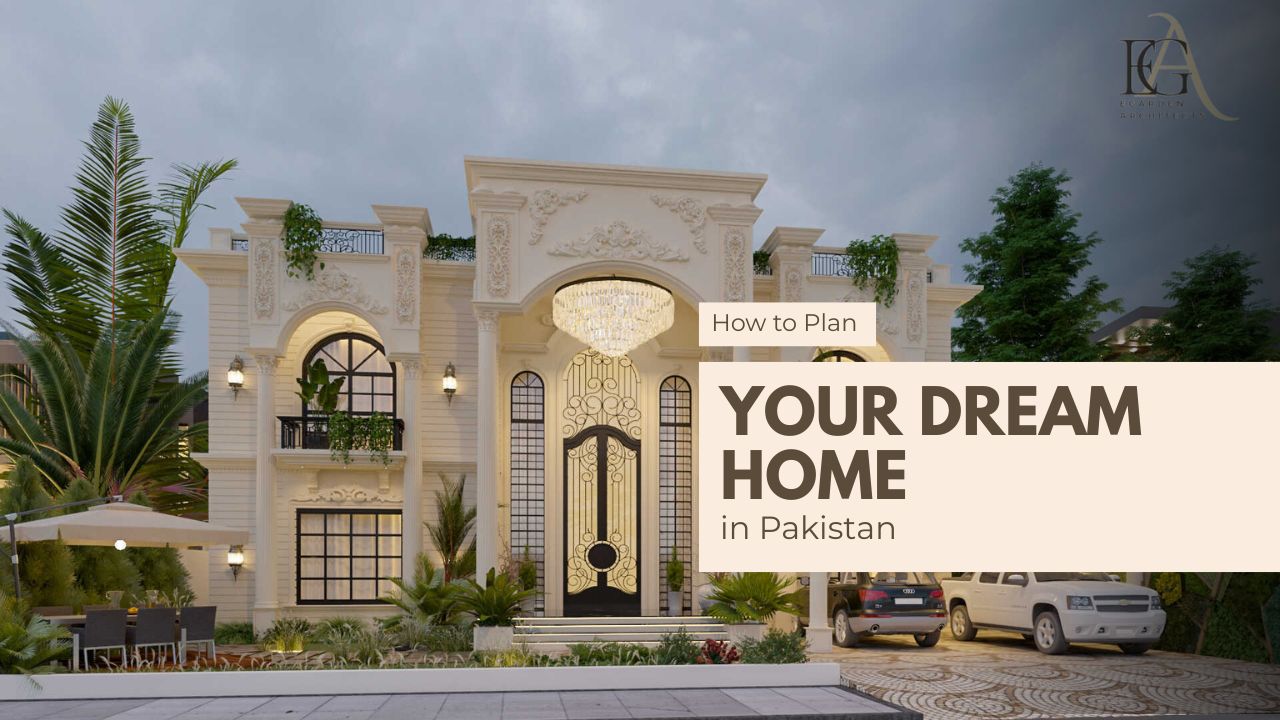
Designing and building your dream home is one of the most exciting—and often overwhelming—experiences of your life. Whether you’re planning a 5 Marla house or a 2 Kanal villa, the right planning ensures that your vision becomes reality without unnecessary delays, cost overruns, or regrets.
In this article, we’ll walk you through a step-by-step guide on how to plan your dream home in Pakistan, covering everything from plot selection to finishing touches.
Step 1: Choose the Right Plot
Before design comes land. The location and shape of your plot greatly impact your home’s design, ventilation, and future resale value.
Tips:
- Look for plots with proper orientation (ideally facing north or east).
- Consider plot shape – square/rectangular plots are easiest to design.
- Check the surrounding infrastructure, roads, drainage, and utility access.
- If in a housing society, confirm their by-laws and covered area restrictions.
Step 2: Hire a Professional Architect
Once your plot is secured, the next most crucial decision is hiring a qualified architect. A good architect turns your vision into a practical, aesthetic, and functional design.
What to look for:
- Experience with your desired house size and style.
- Past portfolio or references.
- Understanding of local construction standards and approvals.
- 3D visualization services (optional but helpful).
Pro Tip: Firms like EG Architect offer full architecture-to-execution services with stunning 3D designs and complete supervision.
Step 3: Define Your Requirements
Before jumping into design, sit down and define your needs:
- Number of floors (single/double/triple)
- Bedrooms & bathrooms
- Kitchen preferences (open vs. closed)
- Storage requirements
- Parking/garage
- Basement, rooftop, terrace, or servant quarters (if needed)
Also consider:
- Future family needs (growing kids, elders)
- Lifestyle (home office, gym, prayer area)
- Budget limitations
Step 4: Finalize Floor Plans and 3D Design
This is where creativity and practicality meet.
Floor plans define the structure, while 3D elevations and interiors help visualize the look and feel. A good architect will balance aesthetics, sunlight, airflow, and privacy.
Important tips:
- Maximize natural light and ventilation.
- Avoid wasted spaces like overly long corridors.
- Consider views and privacy for bedrooms and lounges.
- Ask for multiple options to compare layouts.
Step 5: Budget Planning
Once the design is ready, create a clear construction budget.
Break down your costs into:
- Grey structure (foundation, walls, roof)
- Finishing (tiles, paint, doors, kitchen)
- Electrical and plumbing
- Landscaping and exterior works
- Architect & supervision fees
Set aside 10-15% of your budget as buffer for unforeseen expenses.
Step 6: Get Approvals & NOCs
Before construction begins, submit your drawings for approval to the relevant authority or society.
You may need:
- Structural drawings
- Architectural plans
- Electricity and gas applications
- Society-specific forms
Delays here can hold up your entire project, so submit early and follow up.
Step 7: Begin Construction with Proper Supervision
Hire a reputable contractor or builder and ensure the project is supervised.
Good supervision ensures:
- Structural safety
- Design compliance
- Timely completion
- Quality workmanship
EG Architect offers complete site supervision and turnkey execution, making the process stress-free for clients.
Step 8: Don’t Forget Landscaping
A beautiful home needs a beautiful setting. Plan your landscape design along with your home design.
Include:
- Front lawn, backyard garden
- Driveways and walkways
- Outdoor lighting
- Water features (fountains, ponds)
- Plant selection suited to climate
Step 9: Interior Design & Finishing
Interior design transforms your house into a livable, comfortable home. You can hire a separate interior designer or have your architect handle it.
Key areas to focus:
- Lighting and ceiling design
- Built-in storage solutions
- Paint, textures, wallpapers
- Kitchen and bathroom aesthetics
- Custom furniture (if needed)
Step 10: Final Walkthrough & Handover
Before moving in:
- Inspect everything thoroughly.
- Test all systems (water, gas, electricity).
- Make a punch list for final fixes.
- Request architectural drawings and warranties for future reference.
Final Thoughts
Planning your dream home in Pakistan doesn’t have to be overwhelming. With the right professionals, thoughtful planning, and clear communication, you can build a space that fits your lifestyle, budget, and future aspirations.
If you’re ready to start your journey, reach out to EG Architect — your trusted partner in architectural design, landscape, interiors, and turnkey execution.